PGS.TS.BS. Trần Công Toại, TS. Huỳnh Duy Thảo
**Chủ tịch Hội Tế bào gốc TP.HCM
Email: toaiphd@yahoo.com
** Trường Đại học Y Khoa Phạm Ngọc Thạch
Exosome là các túi ngoại bào có kích thước nhỏ, có cấu tạo là màng lipid kép được tiết ra bởi hầu hết các loại tế bào, đặc biệt là tế bào gốc. Chúng hoạt động như các “bưu kiện sinh học” mang theo protein, lipid, DNA, RNA, miRNA và đóng vai trò quan trọng trong việc giao tiếp giữa các tế bào.
Vì vậy, chúng được khám phá và ứng dụng trong chẩn đoán, điều trị và tiên lượng bệnh. Phân loại dựa vào nguồn gốc sinh học và tính chất vật lý nhự: exosome (30 – 150nm), túi ngoại bào (100 – 1000nm) và phân mảnh apotosic (500 – 2000nm).
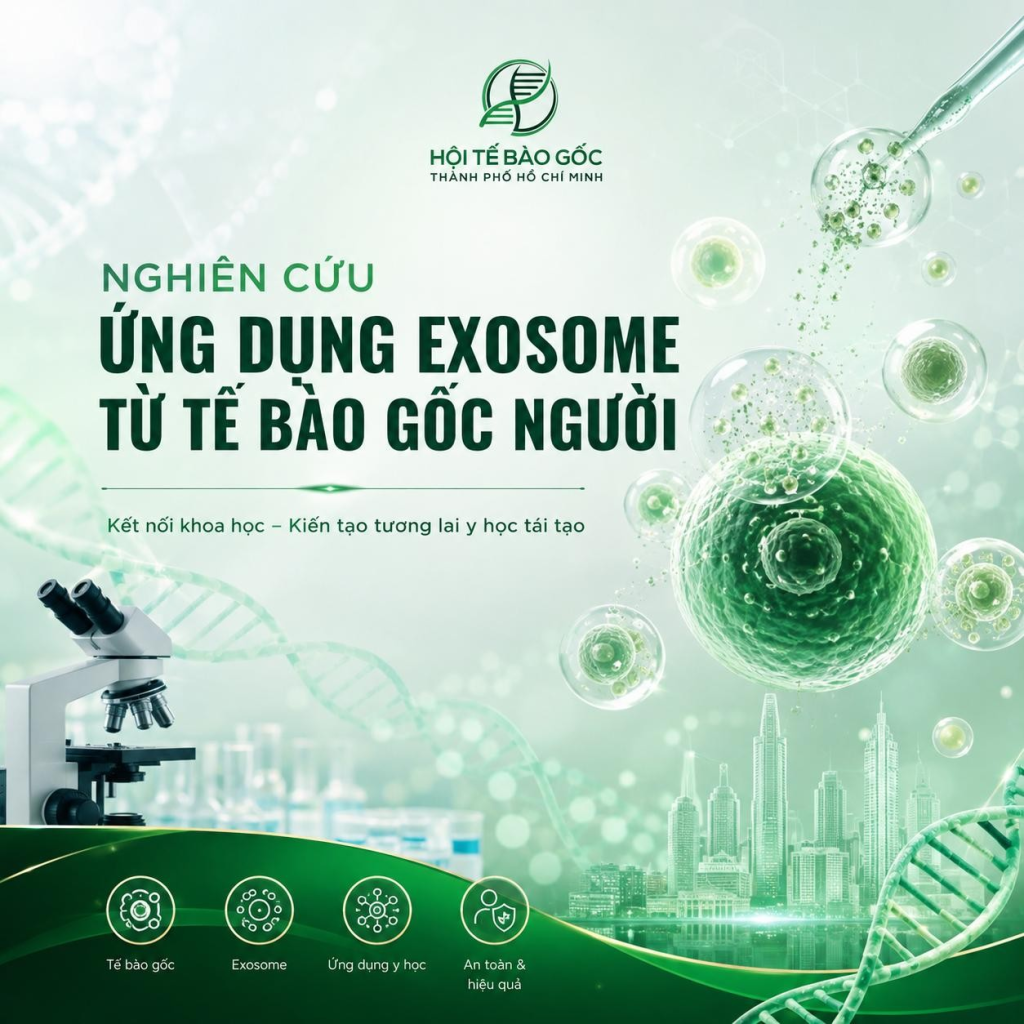
Ngày nay để thu nhận exosome có thể sử dụng nhiều cách khác nhau tùy cơ sở vật chất được đầu tư, qui mô sản suất cũng như mục đích sử dụng. Liệu pháp exosome có thể được sử dụng để điều trị bệnh ung thư, ức chế miễn dịch và y học tái tạo cho các bệnh lý thần kinh, tim mạch, thận, gan và hô hấp, xương khớp và cả trong chống lão hóa.
Abstract
Exosomes are small extracellular vesicles composed of a lipid bilayer membrane, secreted by most cell types, especially stem cells. They function as “biological parcels,” carrying proteins, lipids, DNA, RNA, and miRNA, and play an important role in intercellular communication. Therefore, they are being explored and applied in disease diagnosis, treatment, and prognosis.
They are classified based on biological origin and physical characteristics into: exosomes (30–150 nm), extracellular vesicles (100–1000 nm), and apoptotic bodies (500–2000 nm).
Currently, exosomes can be isolated using various methods depending on available facilities, production scale, and intended applications. Exosome-based therapies may be used to treat cancer, modulate immune responses, and support regenerative medicine for neurological, cardiovascular, renal, hepatic, respiratory, and musculoskeletal diseases, as well as in anti-aging applications